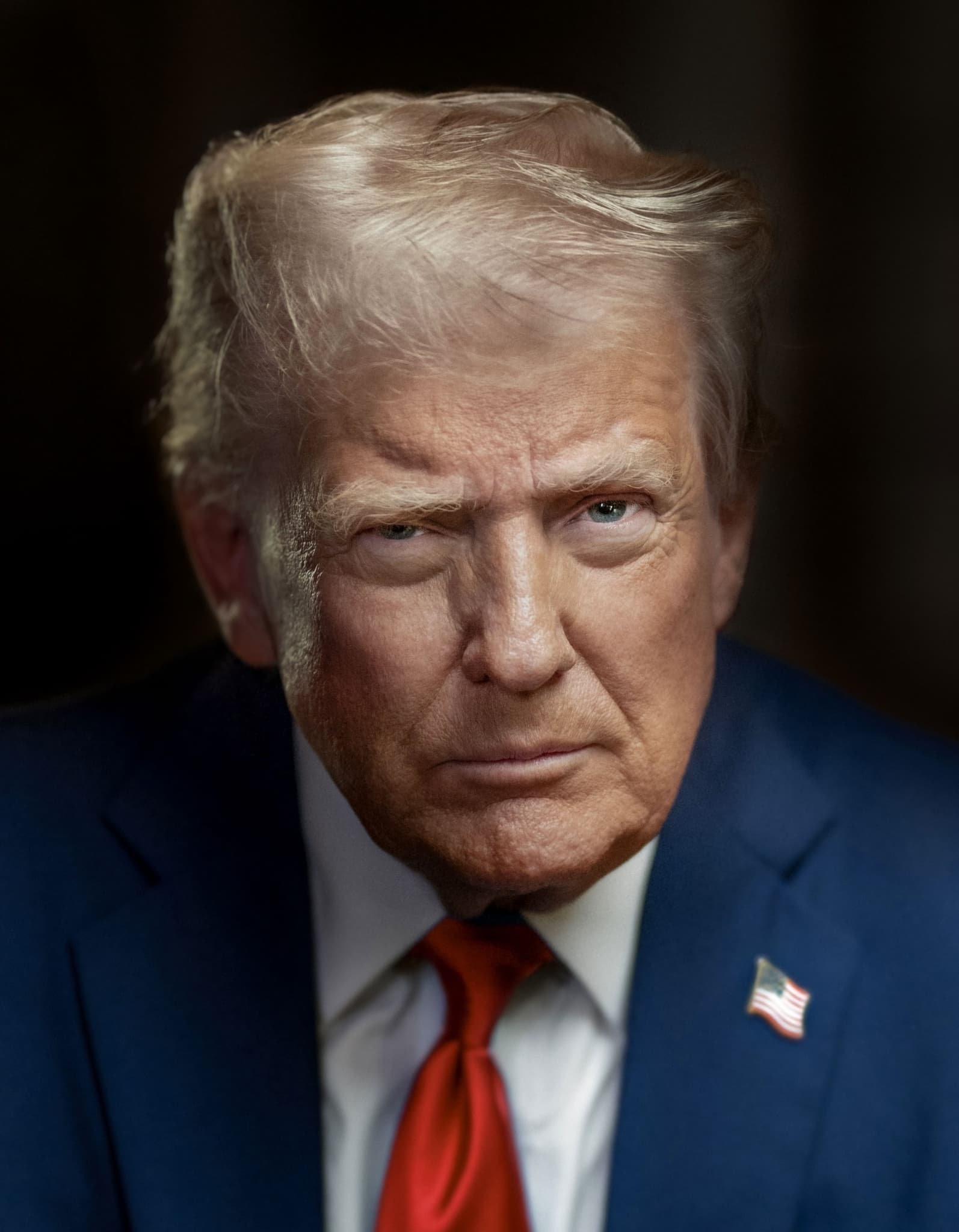
President Trump's latest declaration regarding Iran, prompted by the ongoing situation with a missing fighter jet crew member, immediately registers as a significant macro shock across global financial arteries. This direct, high-stakes rhetoric from the Oval Office instantly recalibrates the geopolitical risk premium embedded within sovereign debt and equity markets. For fixed income veterans, such an escalation demands an immediate reassessment of portfolio duration and credit exposure, as the specter of regional instability directly impacts asset valuations and liquidity. The market's initial response, while not a full-blown panic, clearly signals a scramble for clarity as investors weigh the implications of potential military or economic confrontation on global supply chains and energy markets. This is not merely a headline to be consumed; it is a fundamental shift in the risk landscape that demands active portfolio management.
Market reactions, though nuanced across asset classes today, reflect an underlying current of caution. While the Dow Jones closed down 0.1% at $46,505, the broader S&P 500 gained 0.1% to $6,583, and the Nasdaq saw a 0.2% uptick to $21,879, indicating a mixed equity picture perhaps driven by sector rotation rather than outright risk-on. However, a high-beta name like Tesla plunged 5.4% to $360.59, underscoring selective risk aversion in growth stocks, while the Russell 2000 gained 0.7% to $2,530, suggesting a potential rotation into domestic small caps. Crucially, the Crypto Fear & Greed Index plummeted to 11, signaling "Extreme Fear" despite Bitcoin and Ethereum posting marginal 0.6% gains to $67,279 and $2,066 respectively, indicating that underlying sentiment in speculative assets remains acutely vulnerable to macro and geopolitical headwinds. The U.S. Dollar Index, often a beneficiary of safe-haven flows during geopolitical crises, saw an uptick, confirming a nascent flight to quality that fixed-income desks are now monitoring closely.
Historically, geopolitical flashpoints involving major oil-producing regions like the Middle East have consistently triggered significant market dislocations, particularly within the fixed income complex. The initial knee-jerk reaction typically involves a sharp bid for U.S. Treasuries, driving yields lower as investors seek the perceived safety of sovereign debt, often leading to a temporary flattening or even inversion of the shorter end of the yield curve. However, prolonged or escalating tensions frequently lead to an inflation premium building into the long end, especially if energy prices surge, ultimately steepening the curve as bondholders demand greater compensation for future purchasing power erosion. We saw similar patterns during the Gulf Wars and the initial phases of the Ukraine conflict, where the interplay between safe-haven demand and commodity-driven inflation expectations created a volatile environment for duration management.
From the Federal Reserve's perspective, under Chairman Jerome Powell, this fresh geopolitical uncertainty dramatically complicates the already delicate balance of its dual mandate. While the Fed has been navigating persistent inflation pressures and a tight labor market, an external shock of this magnitude introduces substantial new variables. A significant escalation in the Middle East could trigger an oil price shock, reigniting inflationary pressures just as the Fed seeks to cement price stability, potentially forcing a more hawkish stance for longer than previously anticipated. Conversely, a severe downturn in global trade or demand resulting from conflict could push the Fed towards a more accommodative posture, though this scenario appears less immediate. The immediate focus for Powell and the Federal Open Market Committee will be on monitoring the stability of financial markets and assessing the potential impact on inflation expectations and economic growth projections.
For fixed-income investors, the implications are profound and immediate, particularly concerning yield curve dynamics and credit spreads. An intensifying geopolitical crisis would typically prompt a significant flattening of the Treasury yield curve in the immediate term, as safe-haven demand disproportionately drives down yields on shorter-dated instruments. However, if the threat materializes into actual conflict or prolonged instability, the long end of the curve could steepen sharply due to increased inflation expectations from potential energy supply disruptions and heightened fiscal uncertainty. Credit spreads, particularly for high-yield corporate bonds and emerging market debt, would undoubtedly widen as investors demand greater compensation for increased default risk and reduced liquidity. Duration risk, already a critical consideration in a higher-for-longer rate environment, becomes paramount, requiring active management to mitigate potential capital losses from sudden yield spikes.
Cross-asset implications reverberate widely, impacting everything from equities to digital assets. In equities, we anticipate a flight from higher-beta, growth-oriented stocks towards defensive sectors and companies with strong balance sheets, as evidenced by Tesla's significant decline today. Commodities, especially crude oil and gold, typically serve as primary beneficiaries of geopolitical tension, with gold acting as a traditional safe haven, while oil prices surge on supply concerns. For digital assets, despite Bitcoin and Ethereum showing marginal daily gains, the Crypto Fear & Greed Index at 11 underscores their continued sensitivity to macro sentiment; the narrative of crypto as an uncorrelated safe haven remains untested and largely unproven in true systemic crises, suggesting further downside risk if global instability escalates. Institutional investors are likely to reduce exposure to more speculative segments of the market, prioritizing capital preservation.
Looking ahead, the market's immediate focus will be on further statements from President Trump and any official responses from Iran, as well as the status of the missing crew member. Any signs of de-escalation or, conversely, further saber-rattling, will dictate the pace and direction of market movements. Upcoming economic data releases, including inflation reports and manufacturing PMIs, will now be viewed through the heightened lens of geopolitical risk, making their interpretation even more complex for central bankers and analysts alike. The trajectory of global oil prices, in particular, will be a critical barometer for inflation expectations and the potential for a broader economic slowdown. This situation demands vigilance, as the path forward remains highly uncertain and fraught with potential volatility.
The bottom line for Gokhshtein Media's readers is clear: geopolitical risk has reasserted itself as a primary driver of market behavior, potentially overshadowing the traditional inflation and interest rate narratives that have dominated recent cycles. President Trump's firm stance on Iran introduces a new layer of uncertainty that demands a re-evaluation of portfolio construction, emphasizing capital preservation and robust risk management. Investors must brace for increased volatility across all asset classes, with a particular focus on actively managing duration risk in fixed income and discerning true safe havens from mere speculative plays. The current environment prioritizes agility and a deep understanding of how geopolitical events translate into tangible market impacts, far beyond daily price fluctuations.


