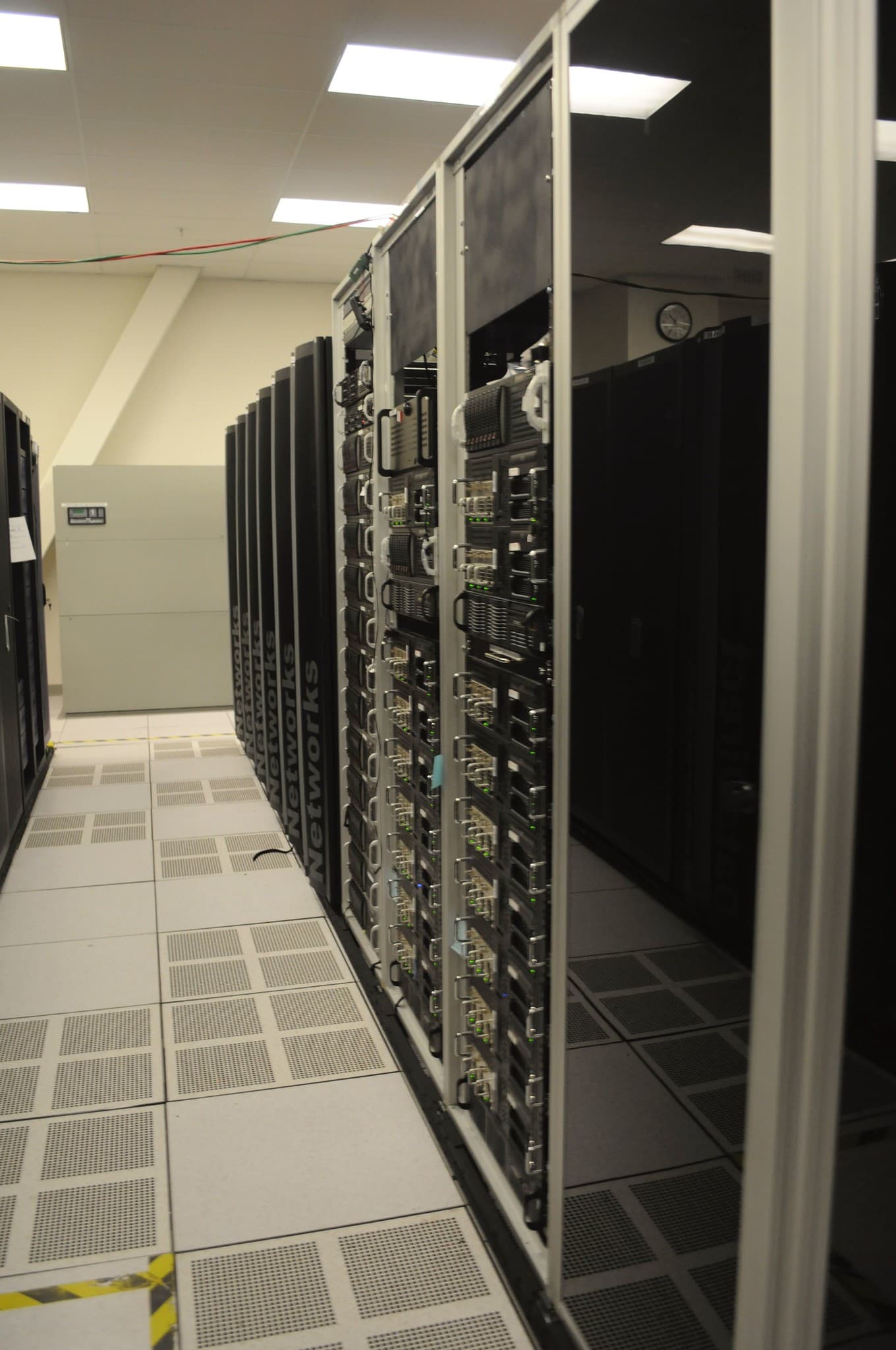
The tweet, recalling a "surreal evening in 1994" while watching "Love Story," serves as a poignant, if perhaps unintentional, metaphor for the current inflection point in artificial intelligence. That era, the nascent days of the commercial internet, was defined by foundational infrastructure bets, a scramble for network effects, and the promise of entirely new business models — a narrative strikingly similar to the massive capital allocation we observe today in AI. Companies are pouring billions into GPU clusters, data centers, and specialized silicon, with the expectation that today's infrastructure will underpin the next generation of enterprise value, much like the early ISPs and web portals laid the groundwork for the digital economy.
Market participants are keenly watching how these colossal investments translate into tangible returns. While the broader market indices like the S&P 500 at $6,583 and Nasdaq at $21,879 show modest gains today, the underlying sentiment for technology is bifurcated. NVIDIA, the undisputed king of AI hardware, continues its upward trajectory, trading at $177.39, reflecting sustained demand for its GPU architecture. Conversely, Tesla saw a significant decline of 5.4% today, highlighting the market's selective enthusiasm and the unforgiving nature of high-growth expectations. The Crypto Fear & Greed Index, registering 9 (Extreme Fear), underscores a pervasive caution, even as AI capital expenditures accelerate, suggesting investors are weighing the long-term promise against immediate market anxieties.
The historical parallels to 1994 are not merely anecdotal; they offer critical lessons in competitive strategy and capital efficiency. That year witnessed the public debut of Netscape Navigator, ushering in the graphical web and igniting a frenzy of investment in internet service providers and content portals. The "Love Story" of 1994 was the idealistic vision of a democratized information superhighway, a vision that eventually birthed trillion-dollar companies. Today, the foundational layer for AI – from advanced GPU compute and specialized data center networks to sophisticated model training pipelines – represents a similar, if more technically complex, buildout. Companies like Microsoft ($373.46), Alphabet ($295.77), and Amazon ($209.77) are engaged in an arms race to secure compute capacity, understanding that control over this infrastructure can create formidable, lasting moats.
From a venture capital perspective, the focus has shifted dramatically from mere application-layer innovation to the underlying enablers of AI. Partners at firms like Sequoia Capital and Andreessen Horowitz are scrutinizing the unit economics of AI inference, the cost per query, and the scalability of proprietary models. Analysts at institutions such as Goldman Sachs are publishing deep dives into the capex cycles of hyperscalers, projecting multi-year investment horizons that will redefine cloud margins. The consensus among leading industry experts is that while the initial buildout is costly, the long-term competitive advantage lies in owning the full stack, from silicon to software, or at least having preferential access to it. This necessitates a strategic allocation of capital that balances immediate operational costs with future market dominance.
Technically, the current AI infrastructure boom is fundamentally driven by the relentless demand for high-performance computing, particularly for large language model (LLM) training and inference. NVIDIA's CUDA platform remains a critical competitive moat, locking in developers and providing an ecosystem that is difficult to replicate. However, the hyperscalers are aggressively pursuing custom silicon, such as Google's TPUs and AWS's Inferentia chips, aiming to optimize performance and reduce reliance on third-party vendors. These architectural decisions directly impact cloud profitability, as custom chips can offer superior cost-per-inference ratios at scale. The "Love Story" of today is the pursuit of computational efficiency and architectural superiority, a complex engineering challenge with vast financial implications.
The sheer scale of investment and the concentration of AI compute power are already attracting the attention of regulators. Under President Trump's administration, and with SEC Chair Paul Atkins overseeing markets, antitrust concerns are a growing topic of discussion. The potential for a few dominant players to control the essential infrastructure for AI raises questions about fair competition and innovation. Policies around data sovereignty, ethical AI development, and the accessibility of foundational models are likely to become battlegrounds, shaping the competitive landscape for decades. The Federal Reserve, under Chair Jerome Powell, continues to monitor these significant capital flows, assessing their broader economic impact and potential for systemic risk.
Looking forward, the strategic roadmaps of tech giants are singularly focused on monetizing these infrastructure investments. The next wave of revenue generation will come not just from raw compute power, but from highly specialized AI-as-a-Service (AIaaS) offerings, vertical-specific AI applications, and the embedding of AI into existing enterprise software. The market opportunity extends far beyond the current scope, encompassing everything from drug discovery and material science to personalized education and advanced robotics. The "surreal evening" of 1994 ultimately laid the foundation for the dot-com boom and bust, and then a sustained era of digital growth; today's AI investments are similarly poised to unlock unprecedented value, but also carry the inherent risks of any nascent, high-stakes technological paradigm.
Gokhshtein's take is clear: the echoes of 1994 in the 2026 AI landscape are undeniable, carrying both immense promise and significant peril. The current, unprecedented capital expenditure in AI infrastructure is not merely a spending spree; it is a calculated bet on the future of enterprise value. Companies that can effectively translate their compute advantage into defensible business models, whether through proprietary data, superior algorithms, or an unassailable software ecosystem, will emerge as the titans of the next digital era. Those that fail to demonstrate clear paths to profitability and robust competitive moats risk becoming footnotes in another era of technological exuberance. The market demands more than just grand visions; it demands concrete economic returns and sustainable growth. This is not a speculative play; it is a foundational shift demanding strategic precision and disciplined capital allocation.


