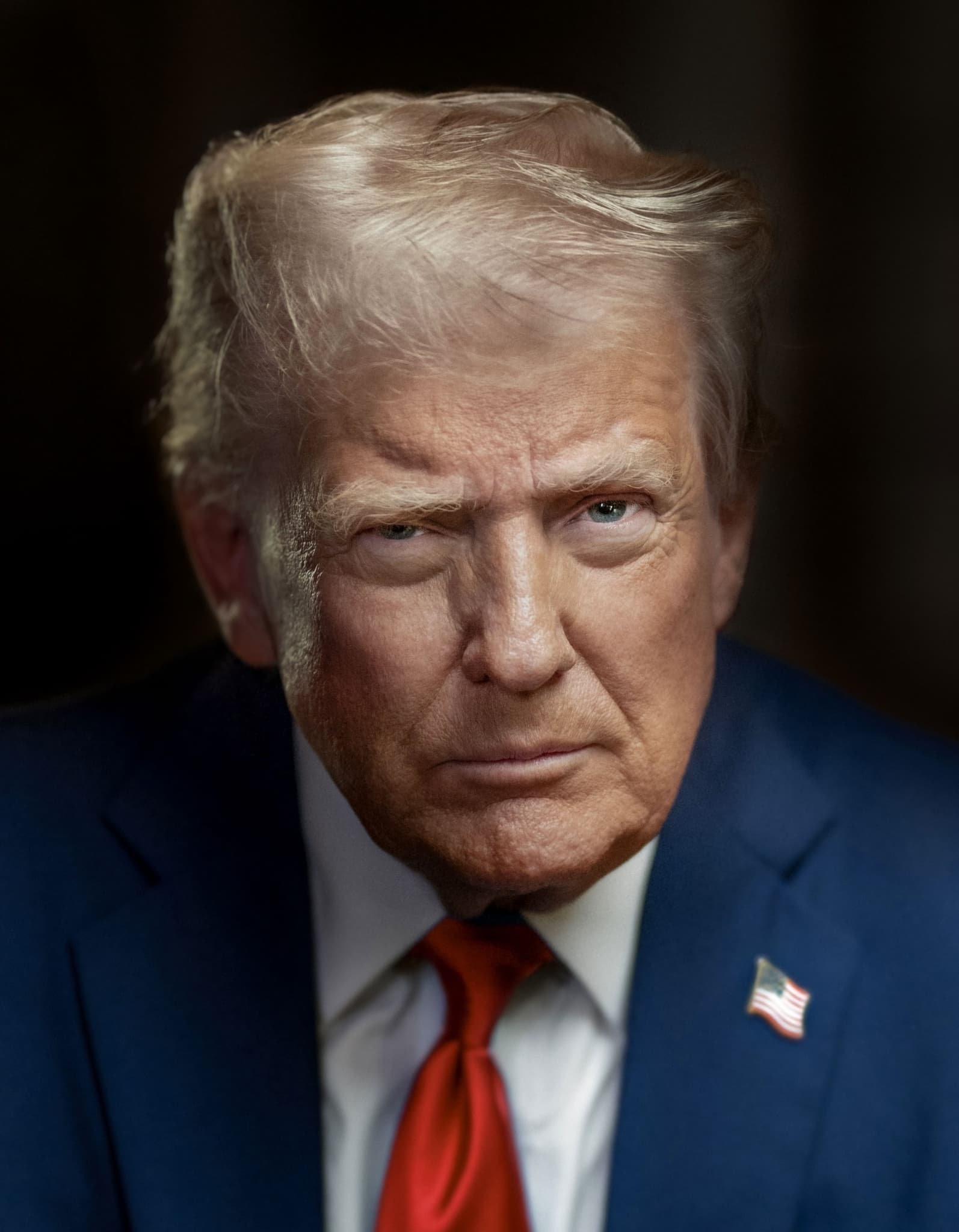
President Trump's latest maneuver to shield White House records from public view marks a significant escalation in the ongoing struggle over executive power and government transparency, sending a subtle but potent signal across financial markets. While not a direct legislative action impacting specific assets, this move fundamentally alters the landscape of accountability, creating an environment where the inner workings of power are less accessible. For an industry like crypto, which often battles for regulatory clarity and transparency from agencies, the precedent of reduced executive branch openness is a chilling development, suggesting a future where crucial decisions could be made further behind closed doors, away from public and market scrutiny.
The immediate market reaction was nuanced, reflecting the indirect nature of the policy shift. The S&P 500 edged up by 0.1% to $6,583, with the Nasdaq seeing a 0.2% gain to $21,879, while the Dow Jones dipped slightly by 0.1% to $46,505. In the crypto sector, Bitcoin held steady at $66,940, showing a negligible 0.0% change, and Ethereum saw a minor dip of 0.2% to $2,053. However, these figures belie a deeper undercurrent of apprehension. The Crypto Fear & Greed Index currently sits at 11, indicating "Extreme Fear," a sentiment exacerbated by any action perceived to diminish transparency or increase political risk. Institutional investors, including giants like BlackRock and Fidelity, who have poured billions into Bitcoin and Ethereum spot ETFs, are acutely sensitive to governance risks that could impact long-term market stability and regulatory predictability.
This executive action positions itself directly against the spirit of the Presidential Records Act, a cornerstone of post-Watergate accountability designed to ensure that presidential records are preserved and available to the public. The move extends beyond mere administrative procedure; it's a strategic assertion of executive privilege that, if left unchallenged, could fundamentally redefine the boundaries of presidential power for generations. In the broader regulatory landscape, this signals a potential weakening of checks and balances, a scenario that has direct implications for how financial regulations are crafted, enforced, and challenged. When the mechanisms of power become opaque, the risk of regulatory capture and decisions favoring select powerful interests over broader market fairness grows exponentially.
The push for such a broad shield on White House records is a clear victory for those who thrive in the shadows of less public scrutiny. Key stakeholders benefiting from reduced transparency include powerful K Street lobbying firms representing industries keen to avoid public disclosure of their influence, as well as entities facing potential investigations or keen to shape policy without public input. Conversely, transparency advocates, watchdog groups like OpenTheGovernment.org, and segments of the financial industry that depend on robust corporate governance and predictable regulatory environments are the clear losers. Organizations like the Blockchain Association and Coin Center, which consistently lobby for clear, transparent crypto regulations, find their mission made harder when the executive branch itself seeks to operate with less accountability.
The industry-wide impact of this move is pervasive, touching any sector that relies on government contracts, clear regulatory frameworks, or is under constant federal scrutiny. For Big Tech behemoths like Apple, Microsoft, and Amazon, whose interactions with government are constant and often contested, a less transparent White House could mean a more unpredictable regulatory environment. In the crypto space, while not a direct regulatory change, the precedent set by shielding records could embolden agencies like the SEC, under Chair Paul Atkins, to make decisions with less public justification or accountability, making it harder for innovative protocols and companies to navigate an already complex regulatory maze. This impacts everything from stablecoin development to the future of decentralized finance (DeFi), where transparency is often heralded as a core tenet.
Legally, this action establishes a dangerous precedent, potentially making it more challenging for future administrations to conduct oversight, for Congress to perform its constitutional duties, and for the public to hold its leaders accountable. It implies a legal framework where executive power can unilaterally define the scope of its own transparency, raising serious questions about the enforceability of existing records laws. For financial markets, this translates into increased compliance costs for regulated entities, as the uncertainty around information access and potential investigations forces companies to invest more in legal and risk management strategies. The perception of a two-tiered system of accountability – one for the government, another for the governed – erodes trust, a vital component of stable financial systems.
Looking ahead, this move will undoubtedly trigger a cascade of legal challenges and legislative pushback. Expect a protracted battle in the courts, with civil liberties groups and potentially even some congressional factions seeking to uphold the integrity of the Presidential Records Act. This action also frames President Trump's broader agenda regarding executive power, signaling a willingness to aggressively expand the authority of the presidency. This stance will inevitably influence upcoming legislative and regulatory debates, from the progress of stablecoin legislation to discussions around federal digital currencies, as a less transparent executive branch can wield disproportionate influence over the drafting and implementation of critical financial policies.
The bottom line from Gokhshtein Media is unambiguous: President Trump's effort to shield White House records represents a significant erosion of governmental transparency, posing a long-term threat to the integrity of both democratic accountability and financial markets. In an era where trust is paramount, particularly in the rapidly evolving digital asset space, any move that diminishes public access to information about power dynamics is a step backward. This is not mere political theater; it is a calculated power play that will reverberate through regulatory agencies, boardrooms, and investor confidence for years to come, demanding vigilance from every player in the financial ecosystem. Transparency is the bedrock of fair markets, and its erosion is a cost no one can afford.


