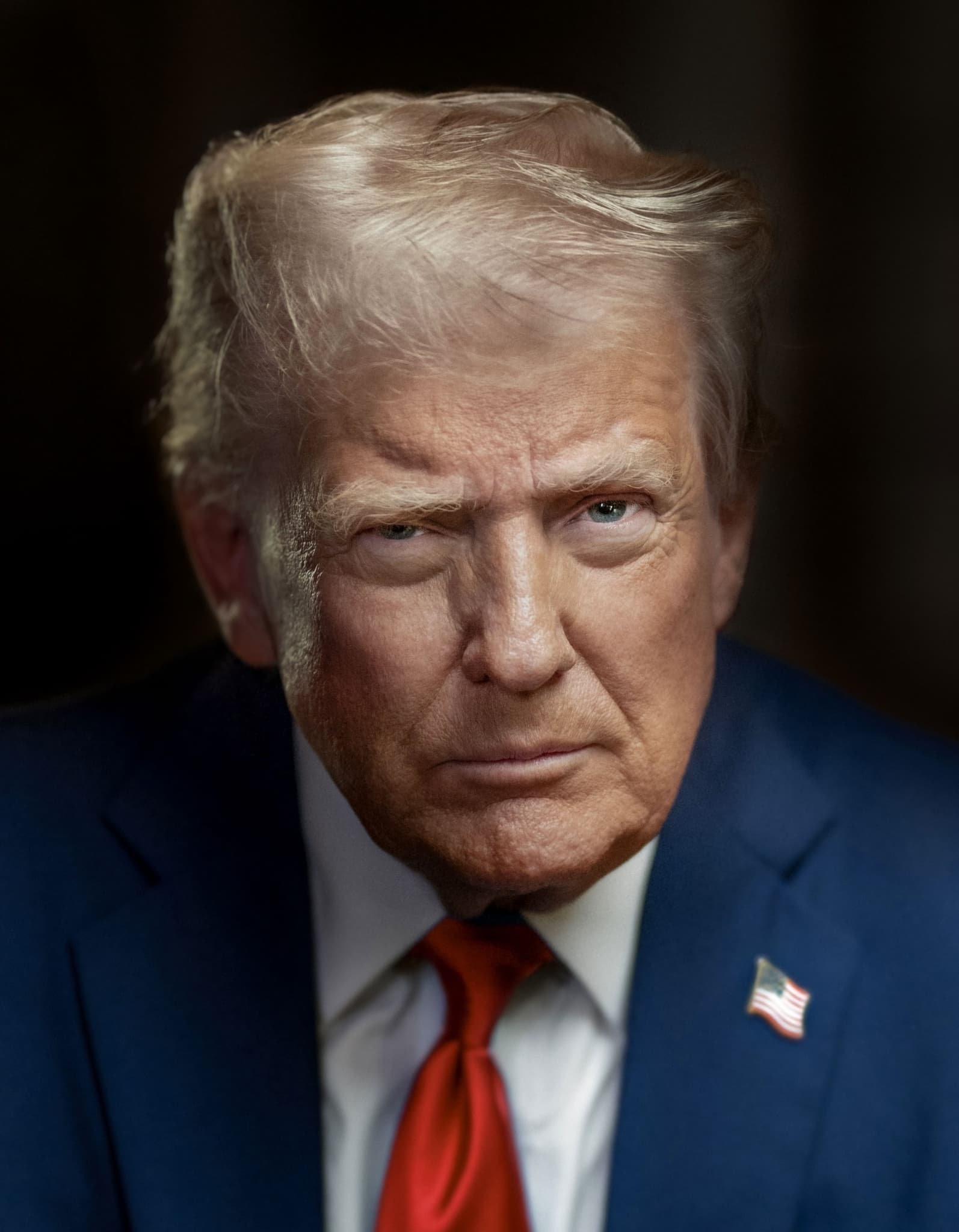
The equity markets are grappling with persistent volatility today, highlighted by Tesla's significant 5.4% decline to $360.59, a stark underperformance against the S&P 500's modest 0.1% gain to $6,583. This divergence underscores a growing unease among investors, particularly within high-beta growth stocks, as the broader market struggles to find decisive direction under the current political climate. The Nasdaq Composite, despite a slight 0.2% uptick to $21,879, masks underlying sector-specific weakness that points to a more cautious capital allocation strategy, directly influenced by the anticipated economic shifts under President Trump's administration. This cautious sentiment is further echoed by the Crypto Fear & Greed Index plummeting to an extreme fear reading of 9, signaling widespread risk aversion across asset classes, including a crypto market where Bitcoin trades at $66,847 and Ethereum at $2,061, despite the institutional legitimacy brought by spot ETFs over the past year. The market is clearly digesting more than just daily news; it's reacting to a deeper, systemic shift in sentiment driven by policy uncertainty.
The market's reaction today is characterized by a distinct rotation away from speculative growth and into perceived safety, even as the major indices show muted movements. Tesla's sharp sell-off is not an isolated incident; it reflects broader anxieties about consumer discretionary spending and the regulatory environment under President Trump’s administration, which has historically favored traditional industries and domestic manufacturing over globalized tech. Despite Nvidia's modest 0.9% gain to $177.39 and Microsoft's 1.1% rise to $373.46, the broader tech sector, exemplified by Meta's 0.8% dip to $574.46 and Amazon's 0.4% decline to $209.77, is exhibiting selective weakness. This indicates a flight from certain high-valuation names, suggesting that investors are scrutinizing balance sheets and immediate profitability more closely amidst potential trade protectionism. The Russell 2000's stronger 0.7% rally to $2,530, outperforming the large-cap indices, hints at domestic-focused resilience, but the underlying narrative points to a flight from global growth exposure and into companies less exposed to international policy shocks.
This current market hesitation bears striking similarities to periods of heightened policy uncertainty observed during President Trump's initial term, particularly concerning trade tariffs and regulatory shifts that impacted global supply chains and multinational corporate profitability. While the indices themselves are not in a freefall, the underlying sector performance and the extreme fear in crypto markets, despite Bitcoin spot ETFs being over a year old and Ethereum spot ETFs approved in May 2024, suggest a deeper psychological overhang related to the current administration. Unlike the post-pandemic rally fueled by unprecedented monetary stimulus, this cycle is defined by fiscal policy dominance and geopolitical tensions, making investors acutely sensitive to executive orders and legislative initiatives from President Trump. The market learned painful lessons from sudden policy changes impacting industries like steel, agriculture, and semiconductors in previous years, and that caution is clearly manifesting now in risk-off positioning across portfolios.
Wall Street analysts, while maintaining long-term bullish calls on AI beneficiaries like Nvidia, are increasingly flagging near-term risks associated with the evolving political landscape and President Trump's 'America First' agenda. Major institutional players, including Fidelity and Vanguard, are reportedly re-evaluating their sector allocations, with a discernible pivot towards defensive plays and dividend-paying stocks that offer more predictable returns amidst uncertainty. The consensus among top-tier sell-side desks at firms like Goldman Sachs and J.P. Morgan suggests that while the long-term structural tailwinds for technology remain intact, the immediate path for highly leveraged growth stories is fraught with policy-driven uncertainty. Hedge funds, particularly those with a macro focus, are increasing their short positions in sectors perceived as vulnerable to increased regulation or protectionist trade policies, signaling a lack of conviction in the current growth narrative and anticipating further market turbulence.
Fundamentally, the 'Trump Slump' narrative challenges the revenue growth trajectories of multinational corporations heavily reliant on global supply chains and open markets. Companies like Apple, trading at $255.92, face potential headwinds from renewed trade tensions that could impact iPhone production costs and sales in key international markets, directly affecting their bottom line. Tesla's core business model, predicated on aggressive expansion into global EV markets, becomes vulnerable to protectionist tariffs and retaliatory measures from trading partners, directly impacting its ability to maintain margins and achieve scale. Even AI leaders like Nvidia, while benefiting from domestic innovation, could see their international market penetration challenged if geopolitical tensions escalate, disrupting access to critical components or limiting sales in strategic regions. The competitive landscape for every major tech player shifts dramatically under a 'America First' policy framework, forcing a re-evaluation of long-term international growth projections and operational efficiencies across the board.
The broader market implications of this 'Trump Slump' are profound, signaling a potential sector rotation away from globalized growth narratives towards domestically focused, infrastructure, and defense-related industries. Risk appetite is clearly contracting, as evidenced by the Crypto Fear & Greed Index at 9, driving capital out of speculative assets and into more stable, often less exciting, value plays. The correlation effects are also noteworthy: once uncorrelated assets like cryptocurrencies and high-growth tech stocks are showing synchronous movements during periods of acute risk aversion, indicating a broader deleveraging event rather than isolated sector-specific issues. This environment demands that investors prioritize balance sheet strength, resilient cash flows, and robust domestic market exposure over aggressive international expansion strategies or purely speculative growth, as the policy landscape dictates a more conservative approach.
Looking forward, investors must closely monitor President Trump's upcoming policy pronouncements, particularly regarding trade, immigration, and regulatory frameworks for key industries. Any indication of renewed tariffs or stricter environmental regulations could serve as immediate catalysts for further market volatility, especially for companies with significant international exposure or those reliant on complex global supply chains. Technically, the S&P 500's ability to hold above the 6,500 level is critical, while the Nasdaq's resilience above 21,500 will be a key indicator of whether the tech sell-off intensifies. For Tesla, breaking below its current $360.59 support could trigger further downside towards the $320-$300 range, while Nvidia needs to consolidate above $175 to maintain its upward momentum. The market is awaiting concrete guidance from corporate earnings calls in the coming weeks, which will either confirm or refute the pessimistic outlook currently dominating sentiment, offering a clearer path for sector leadership.
Gokhshtein's take is unequivocal: the market is underpricing the persistent policy risk emanating from the White House, and the 'Trump Slump' is far from over. Investors must adopt a defensive posture, prioritizing companies with strong domestic revenue bases, robust balance sheets, and insulation from global trade shocks. We advocate for a reallocation of capital towards sectors like defense, traditional energy, and healthcare, while selectively reducing exposure to high-beta growth stocks with significant international revenue streams. Names like Tesla remain a Sell, with a price target of $320, given the heightened regulatory and geopolitical risks that directly impact its global expansion. Nvidia, despite its AI leadership, faces short-term headwinds and should be re-evaluated as a Hold until policy clarity emerges, as its supply chain remains vulnerable. This is not a time for passive investing; active portfolio management focused on mitigating political risk is paramount for preserving capital and identifying opportunistic buys in undervalued domestic plays.


