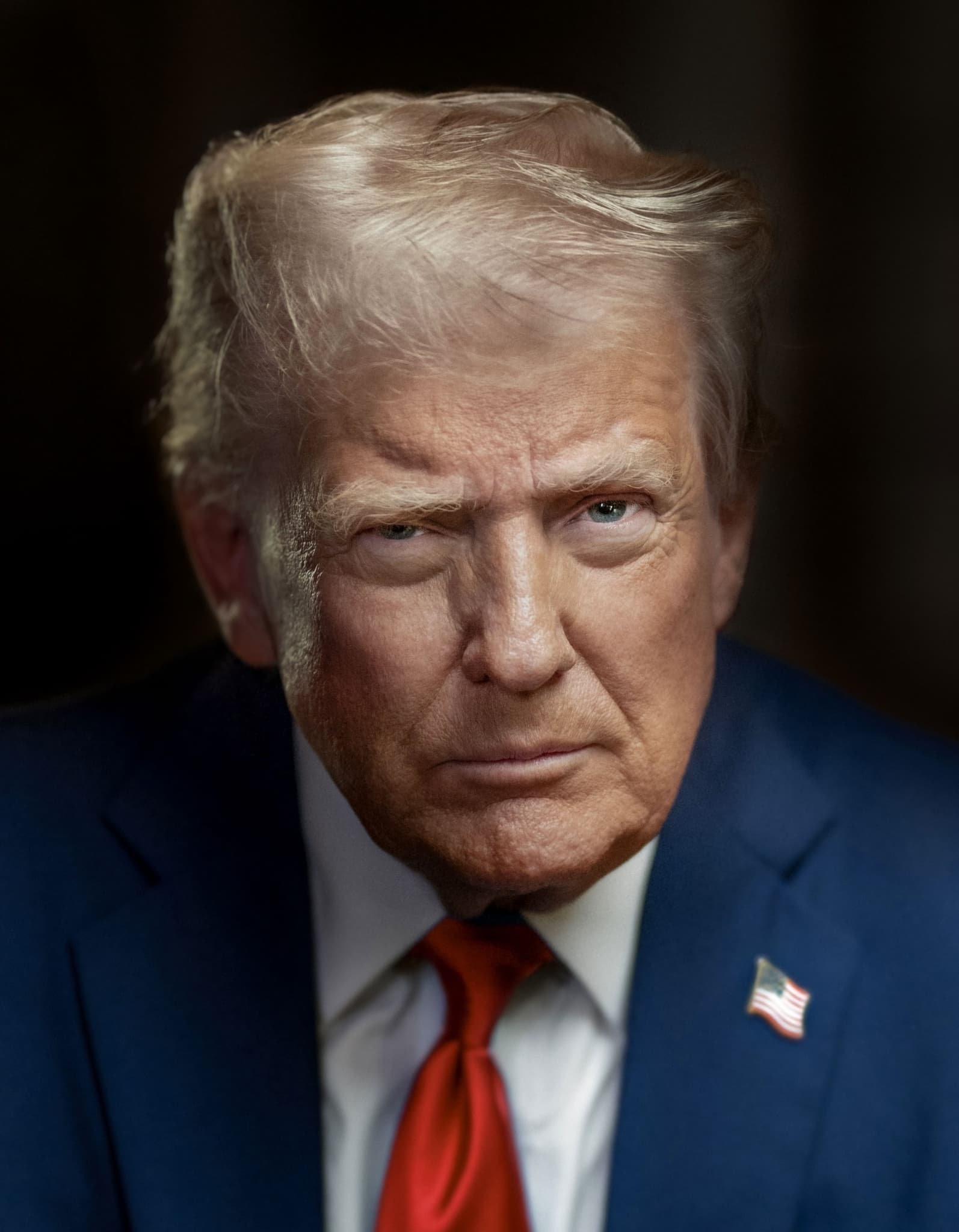
President Trump's blunt warning that the United States will return Iran "back to the stone ages" without a deal in the coming weeks has immediately recalibrated risk assessments across global financial markets. Issued early Thursday, the aggressive posture signals a potential intensification of the administration's already hawkish stance, immediately driving speculation around oil supply disruptions and increased defense spending. This rhetoric, far from mere diplomatic posturing, lays the groundwork for executive actions that could trigger significant capital shifts and compliance burdens for international businesses. The market's initial response reflects deep uncertainty, particularly for assets sensitive to geopolitical instability and energy price volatility, setting a tense stage for the days ahead.
The immediate financial fallout saw a divergent reaction across major asset classes, underscoring the complex interplay of fear and opportunity in such moments. While the S&P 500 climbed to $6,575 and the Nasdaq surged to $21,841, propelled by gains in tech giants like Alphabet (+3.4% to $297.39) and Tesla (+2.6% to $381.26), the cryptocurrency sector experienced a sharp downturn. Bitcoin, often touted as a safe haven, fell 2.6% to $66,909, and Ethereum dropped 3.7% to $2,055, pulling the Crypto Fear & Greed Index down to 12, signaling "Extreme Fear" among digital asset investors. This pronounced risk-off move in crypto, contrasting with the equity rally, suggests investors are viewing digital assets as highly exposed to global instability rather than a hedge against it, at least in this immediate reaction.
Trump's "stone ages" declaration is not an isolated rhetorical flourish; it directly informs the ongoing legislative and executive debates surrounding Iran's nuclear program and regional influence. This aligns with a persistent push from hawkish factions in Congress, who have long advocated for a maximal pressure campaign, leveraging existing sanctions authority under acts like the Iran Freedom and Counter-Proliferation Act of 2012 and the Countering America's Adversaries Through Sanctions Act (CAATSA). The administration holds significant executive power to implement new financial penalties through the Treasury Department's Office of Foreign Assets Control (OFAC), bypassing immediate congressional approval for many measures. Such a stance effectively closes the door on diplomatic off-ramps and sets the stage for a dramatic escalation in economic warfare, forcing Congress to either actively resist or tacitly endorse the strategy.
The loudest proponents for such aggressive action include powerful lobbying groups, particularly those aligned with specific defense interests and certain pro-Israel organizations, who view Iran as an existential threat to regional stability. Think tanks like the Foundation for Defense of Democracies (FDD) have consistently advocated for stringent sanctions and military deterrence, framing any diplomatic concession as weakness. On the other side, multinational energy corporations and financial institutions, represented by groups like the National Foreign Trade Council, typically express concerns over the destabilizing impact of heightened tensions on global supply chains and the immense compliance costs of new sanctions regimes. The President's declaration effectively empowers the hardliners within his administration and their allies on Capitol Hill, marginalizing voices advocating for de-escalation or a return to multilateral negotiations.
The direct beneficiaries of this hardened stance are clear: defense contractors and cybersecurity firms, who anticipate increased spending on military readiness and intelligence infrastructure. Companies like Lockheed Martin and Raytheon Technologies typically see upward pressure on their stock valuations in periods of heightened geopolitical risk. Conversely, global energy giants like ExxonMobil and Chevron face increased uncertainty regarding oil production and pricing, with any disruption in the Strait of Hormuz potentially sending crude prices soaring, impacting their downstream refining margins and consumer demand. For the crypto sector, the implications are two-fold: while some theorize a long-term flight to decentralized assets amidst global turmoil, the immediate effect, as seen by Bitcoin's dip to $66,909, indicates a short-term aversion to risk, particularly as regulatory bodies like the SEC under Chair Paul Atkins continue to scrutinize digital asset markets.
The legal precedent for such sweeping actions against a sovereign nation is well-established within the framework of US national security law, allowing the President significant latitude to impose sanctions via executive orders under the International Emergency Economic Powers Act (IEEPA). The "stone ages" rhetoric, while hyperbolic, signals an intent to employ maximum economic pressure, which would likely involve targeting Iran's financial sector, its oil exports, and potentially its shipping and port authorities. Enforcement falls squarely on the Treasury Department's OFAC, which would demand stringent compliance from global banks, payment processors, and even technology companies to block sanctioned entities and transactions. The compliance burden for financial institutions, already grappling with complex KYC/AML regulations and the intricacies of crypto-related transactions, would escalate dramatically, leading to increased legal and operational costs for major players like JPMorgan Chase and Goldman Sachs.
The coming weeks will reveal the true depth of President Trump's commitment to this escalated posture, with markets closely watching for specific executive orders or congressional resolutions backing the threat. The immediate next steps will likely involve diplomatic maneuvers by allies and adversaries alike, attempting to either de-escalate the situation or capitalize on the increased volatility. Any concrete actions from the White House, such as a full embargo on Iranian oil or further restrictions on financial transactions, would undoubtedly send shockwaves through global commodity markets and could prompt retaliatory measures from Tehran, potentially involving cyberattacks or proxy actions in the Middle East. The legislative pipeline in Washington will pivot sharply, with debates over defense appropriations and potential new sanctions packages taking center stage, overshadowing other policy priorities for the foreseeable future.
Gokhshtein Media's take is clear: President Trump's "stone ages" threat against Iran is not just bluster; it is a direct signal to global capital that a new, more aggressive phase of economic and geopolitical confrontation has begun. The divergence in market reactions — a rally in equities despite crypto's plunge — highlights a selective risk appetite, where established industries with government ties may see opportunity in conflict, while nascent, less integrated assets bear the brunt of uncertainty. This move prioritizes geopolitical leverage over market stability, forcing companies to re-evaluate their exposure to a volatile Middle East and brace for significant compliance costs. The winners are those positioned for increased defense spending and those adept at navigating complex sanctions regimes; the losers are likely to be global consumers facing higher energy costs and any entity caught in the crosshairs of an escalating economic war.


