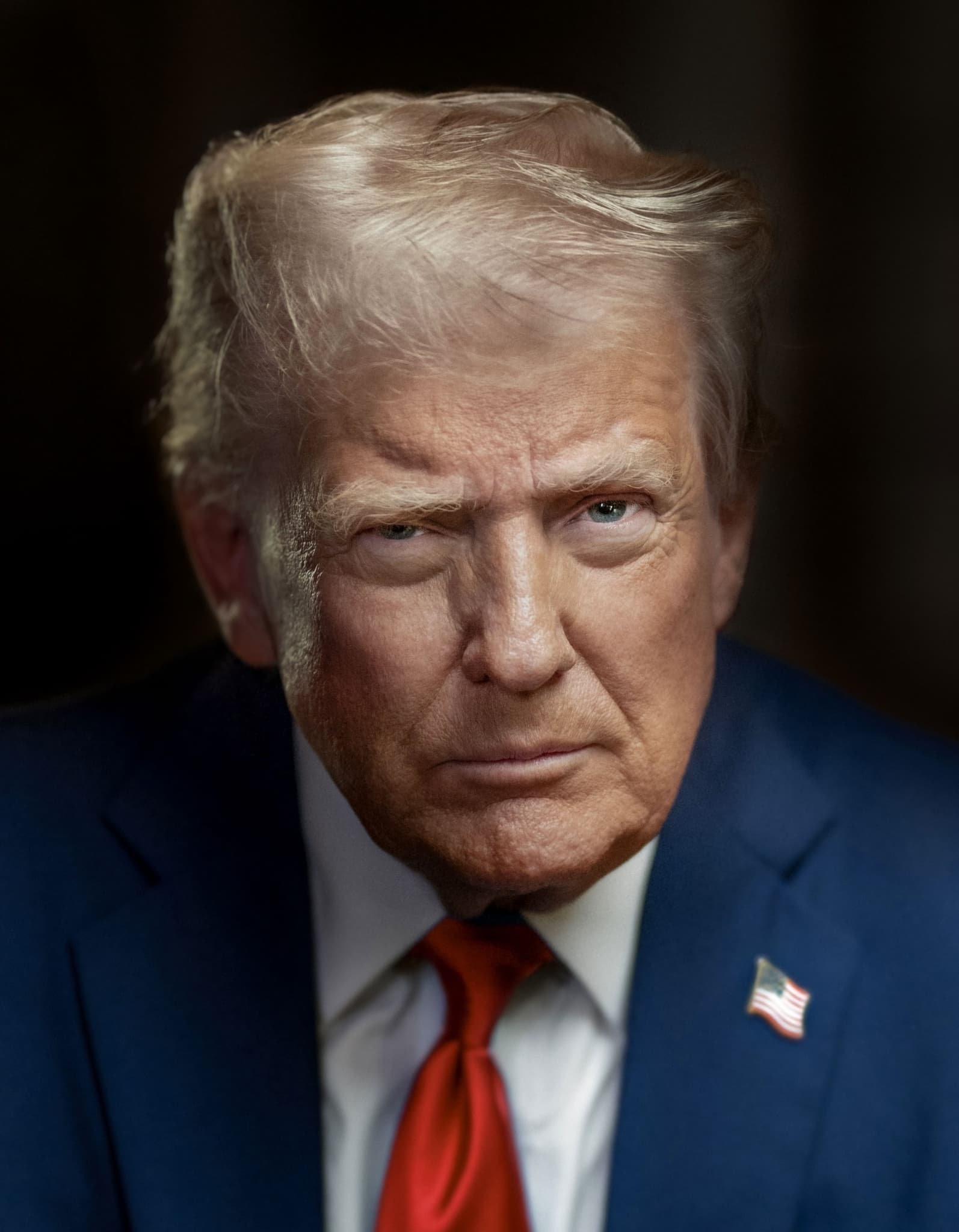
President Trump's demand for a Republican-only Department of Homeland Security bill by June 1 signals a deepening partisan divide that will effectively stall critical financial legislation and inject profound uncertainty into federal spending. This aggressive ultimatum, issued directly from the Oval Office, is a clear power play designed to force a legislative victory on immigration, but its immediate fallout promises to ripple through Washington's ability to govern on issues from digital asset frameworks to essential appropriations. The market's initial reaction is one of cautious watchfulness, with investors weighing the implications for government contractor valuations and the broader legislative calendar that determines regulatory clarity for burgeoning sectors.
While major indices like the S&P 500 closed up 0.7% at $6,575 and the Nasdaq gained 1.2% to $21,841 today, this reflects broader tech strength and specific earnings rather than optimism about legislative cohesion. The Crypto Fear & Greed Index remains stubbornly at 8, signaling "Extreme Fear," indicating that digital asset investors are already pricing in significant policy uncertainty, a sentiment unlikely to be assuaged by renewed partisan gridlock. Defense and security contractors, such as Leidos and Raytheon Technologies, saw their stocks trade within expected ranges, but any prolonged budget stalemate or government shutdown threat could introduce sharp volatility. Bond markets are also reflecting the uncertainty, with yields holding steady as traders evaluate the prospect of delayed appropriations bills and their direct impact on federal borrowing and interest rate stability.
This presidential decree arrives as Congress struggles to advance key financial regulatory reforms, including long-stalled stablecoin legislation and comprehensive market structure bills for digital assets. The White House's singular focus on a unilateral DHS bill effectively shoves other vital legislative priorities, including those critical for the crypto industry's growth, further down an already congested and contentious docket. This move underscores the administration's willingness to prioritize its core agenda items, even at the direct expense of bipartisan progress on economic issues that Wall Street and Silicon Valley have been clamoring for for years. The fight for a DHS bill becomes a zero-sum game, consuming political capital and committee bandwidth that would otherwise be dedicated to economic governance.
The demand represents a clear political win for hardline Republicans like House Speaker Mike Johnson and Senate Minority Leader Mitch McConnell, who have consistently supported President Trump’s border security agenda, positioning themselves for a powerful legislative flex. Lobbying groups representing defense contractors, such as the Aerospace Industries Association and the National Defense Industrial Association, are already calculating potential gains from increased border funding and enhanced security budgets, positioning their clients for lucrative contracts. On the other side, Democrats and some moderate Republicans, backed by civil liberties advocates and businesses reliant on a stable immigration workforce, will undoubtedly resist a partisan bill, setting the stage for a protracted budget fight that benefits no one but the most entrenched political players.
The real impact will be felt by companies desperately awaiting regulatory clarity and a predictable operating environment. Financial institutions like JPMorgan Chase and Goldman Sachs, which have invested heavily in blockchain technology and digital asset ventures, require a stable legislative landscape to expand their offerings beyond the already approved Bitcoin spot ETFs, currently trading at $68,153, and Ethereum spot ETFs, at $2,142. Without a clear stablecoin framework, firms like Circle and Tether face continued operational uncertainty in the U.S. hindering their ability to innovate and compete globally. The delay in broader market structure legislation also impacts exchanges like Coinbase and Kraken, preventing them from fully innovating and capturing market share in a rapidly evolving global crypto economy.
A Republican-only DHS bill, if passed through reconciliation or other parliamentary maneuvers, would set a dangerous precedent for future appropriations and policy debates, signaling a complete breakdown of bipartisan governance. This unilateral move could empower the executive branch to push through its agenda with minimal Congressional input, potentially leading to immediate legal challenges regarding the appropriations process and the fundamental separation of powers. Compliance costs for industries dependent on predictable legislative cycles, particularly in fintech and crypto, will undoubtedly rise as they navigate an increasingly volatile and unpredictable regulatory landscape. The SEC, under Chair Paul Atkins, already faces an uphill battle in establishing clear digital asset guidelines; legislative gridlock only exacerbates this challenge, leaving firms in a regulatory vacuum.
The June 1 deadline is not just a legislative target; it is a political tripwire designed to force immediate action. Expect intense lobbying efforts from various industry groups attempting to either push for a swift resolution that includes their priorities or protect their interests in the ensuing chaos. The immediate focus will be on whether the House and Senate Republican leadership can unite around a bill that satisfies President Trump without alienating enough moderates to prevent passage or a filibuster. Failure to meet this deadline could trigger a government funding crisis later in the year, further jeopardizing any chance of progress on issues like a national digital currency framework or even basic appropriations for critical agencies like the Treasury and the CFTC, extending the uncertainty.
President Trump's demand for a Republican-only DHS bill by June 1 is a stark reminder that in Washington, political power plays often trump economic stability and legislative progress. This move, while ostensibly about border security, effectively holds the broader legislative agenda hostage, ensuring that critical financial regulations and digital asset frameworks will remain in an indefinite limbo. For investors and market participants, this means bracing for sustained policy uncertainty and increased market volatility, as the administration prioritizes partisan victories over the predictable governance essential for sustained economic growth. Gokhshtein Media asserts that until this political standoff resolves, the path to a coherent and functional crypto regulatory environment in the United States remains obstructed and fraught with peril.

