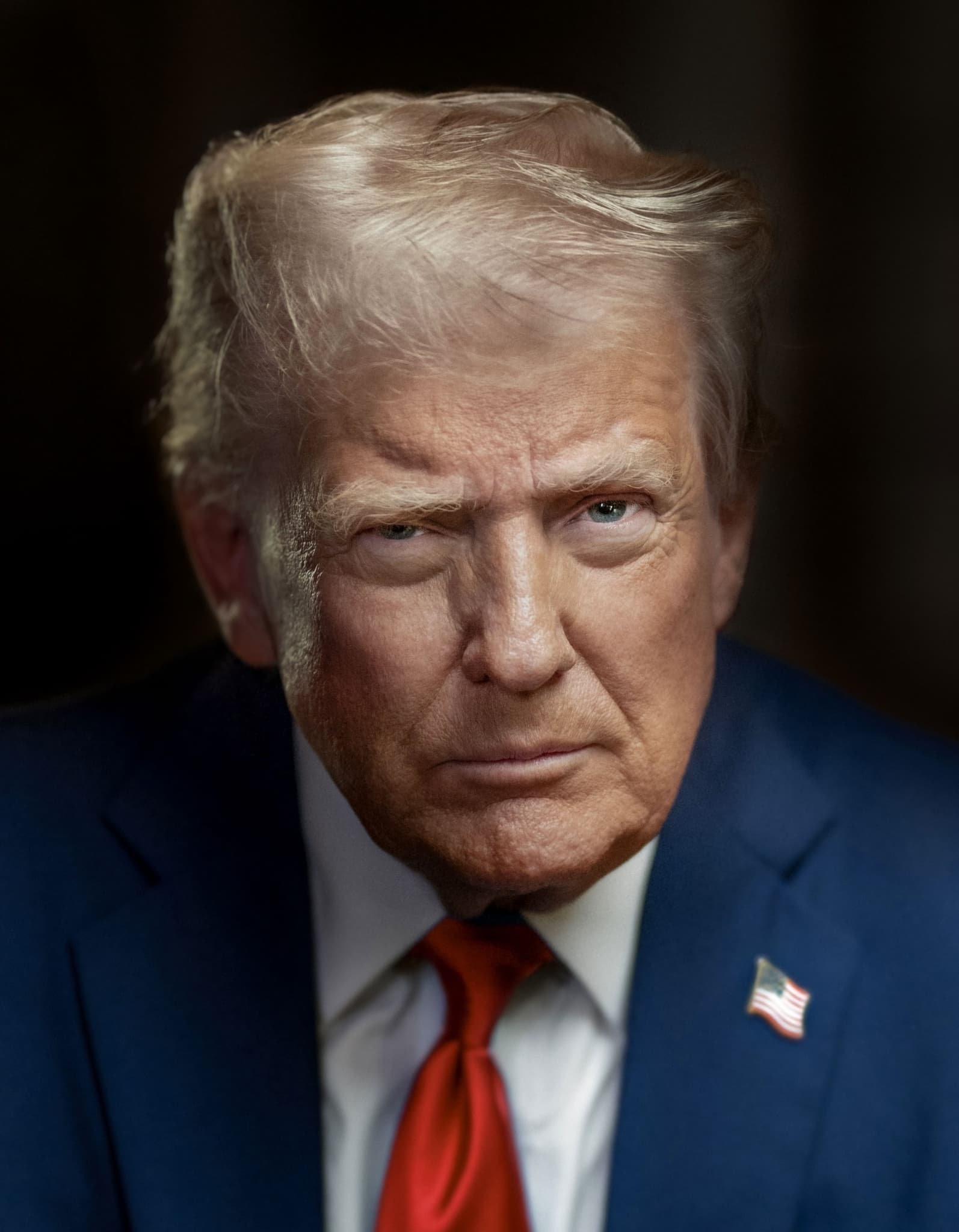
President Trump's recent public statement, labeling Tiger Woods' decision to seek treatment a "good thing," reverberated across Washington not for its direct policy implications, but for what it revealed about the administration's current priorities. While seemingly an innocuous personal observation, this deployment of the President's public attention signals a continued focus away from pressing financial legislative battles, including the long-awaited clarity on digital asset regulation. In a capital gripped by an ongoing struggle to define the future of finance, the President's rhetoric, even on non-policy matters, dictates where political capital is being spent, and critically, where it is not. The vacuum of executive leadership on complex regulatory frameworks leaves markets vulnerable to uncertainty, particularly when the Crypto Fear & Greed Index sits at a stark 12, indicating "Extreme Fear."
The immediate market reaction to such a statement is, predictably, muted for traditional assets, with the Nasdaq closing at $21,841 (+1.2%), the Dow Jones at $46,566 (+0.5%), and the S&P 500 at $6,575 (+0.7%) today. However, for the nascent digital asset sector, the persistent lack of high-level executive engagement on policy issues is a tangible drag on sentiment, even as some assets saw minor gains, with Ethereum up 1.7% to $2,139 while Bitcoin saw a slight dip to $68,090 (-0.2%). This divergence underscores that while equities might rally on broader economic data, the crypto market remains acutely sensitive to the regulatory climate, or lack thereof. The absence of a clear, unified message from the White House on digital asset oversight translates directly into continued investor apprehension, preventing a full recovery from the current "Extreme Fear" sentiment.
This presidential focus on celebrity instead of legislation fits into a broader, frustrating pattern for those pushing for comprehensive financial regulatory reform, especially within the digital asset space. Congress has been mired in debate over stablecoin legislation and broader market structure bills for years, with little tangible progress since the approval of Bitcoin spot ETFs in January 2024 and Ethereum spot ETFs in May 2024. The current administration's public posture further underscores a legislative environment where critical financial policy is left to languish, allowing regulatory agencies like the SEC, under Chair Paul Atkins, and the Federal Reserve, led by Jerome Powell, to operate without clear congressional mandates. This piecemeal approach to regulation by enforcement creates a confusing and often contradictory landscape for innovative financial technologies.
Following the money reveals clear winners and losers in this era of presidential distraction. Traditional finance lobbyists, representing established banking giants and legacy institutions, often prefer a slow-moving, cautious approach to new financial technologies, as it protects their existing market dominance. Their influence benefits from a White House that is not actively pushing disruptive new regulatory frameworks. Conversely, the digital asset industry, including major players like Coinbase, Circle, and investment managers offering crypto ETFs such as BlackRock and Grayscale, are the clear losers. Organizations like the Blockchain Association and Coin Center have spent millions lobbying for clarity, only to see executive attention diverted to non-policy matters, hindering their ability to innovate and expand within a well-defined legal framework.
The industry-wide impact of this regulatory inertia is profound. Companies attempting to build and scale within the digital asset ecosystem face immense compliance costs and legal uncertainty. Stablecoin issuers, for instance, operate under a patchwork of state and federal guidance, impeding their ability to achieve true global scale and interoperability. Furthermore, major tech companies like Meta ($579.23), Alphabet ($297.39), and Amazon ($210.57), which are actively exploring blockchain and Web3 integrations, find their strategic planning complicated by the lack of a clear national regulatory strategy. This ambiguity stunts innovation, pushes talent and capital overseas, and prevents the United States from fully capitalizing on the economic potential of digital assets, all while the President comments on celebrity news.
The legal analysis of such presidential non-engagement points to a continued reliance on existing statutory powers by regulatory bodies, often leading to enforcement actions as a primary means of policy-setting. SEC Chair Paul Atkins, while committed to a rules-based approach, is constrained by the absence of new legislative mandates, forcing the agency to interpret decades-old securities laws for novel digital assets. This approach creates a reactive, rather than proactive, regulatory environment, increasing legal risks for companies and chilling investment. The cost of compliance and the specter of litigation become significant barriers to entry, effectively ceding market leadership to jurisdictions with clearer, more forward-thinking regulatory frameworks, a direct consequence of Washington's distracted attention.
Looking ahead, the legislative pipeline for digital assets remains crowded but stalled, with several bills awaiting committee action or floor votes that would provide much-needed clarity on stablecoins, market structure, and commodity classifications. While bipartisan efforts continue in Congress, significant breakthroughs are unlikely without a strong push from the executive branch. The Federal Reserve, under Chair Jerome Powell, will continue to monitor financial stability and may issue further guidance on stablecoins or central bank digital currencies, but these actions will remain administrative, not legislative. The coming months will test whether the administration can pivot its focus to address these critical economic policies, or if it will continue to prioritize public relations over substantive regulatory reform.
The bottom line from Gokhshtein Media is unambiguous: President Trump’s public statements, even on seemingly trivial matters, are a powerful signal of where the administration's political capital is being invested. The current posture indicates a clear prioritization of other issues over the immediate, comprehensive financial regulatory reform desperately needed by the digital asset sector. This strategic deflection leaves the industry in a state of prolonged, costly uncertainty, effectively benefiting entrenched interests and those who thrive in regulatory arbitrage, while penalizing innovation and compliant growth. For investors navigating a market gripped by "Extreme Fear," the message from Washington is clear: don't expect a guiding hand on crypto policy from the top anytime soon.


