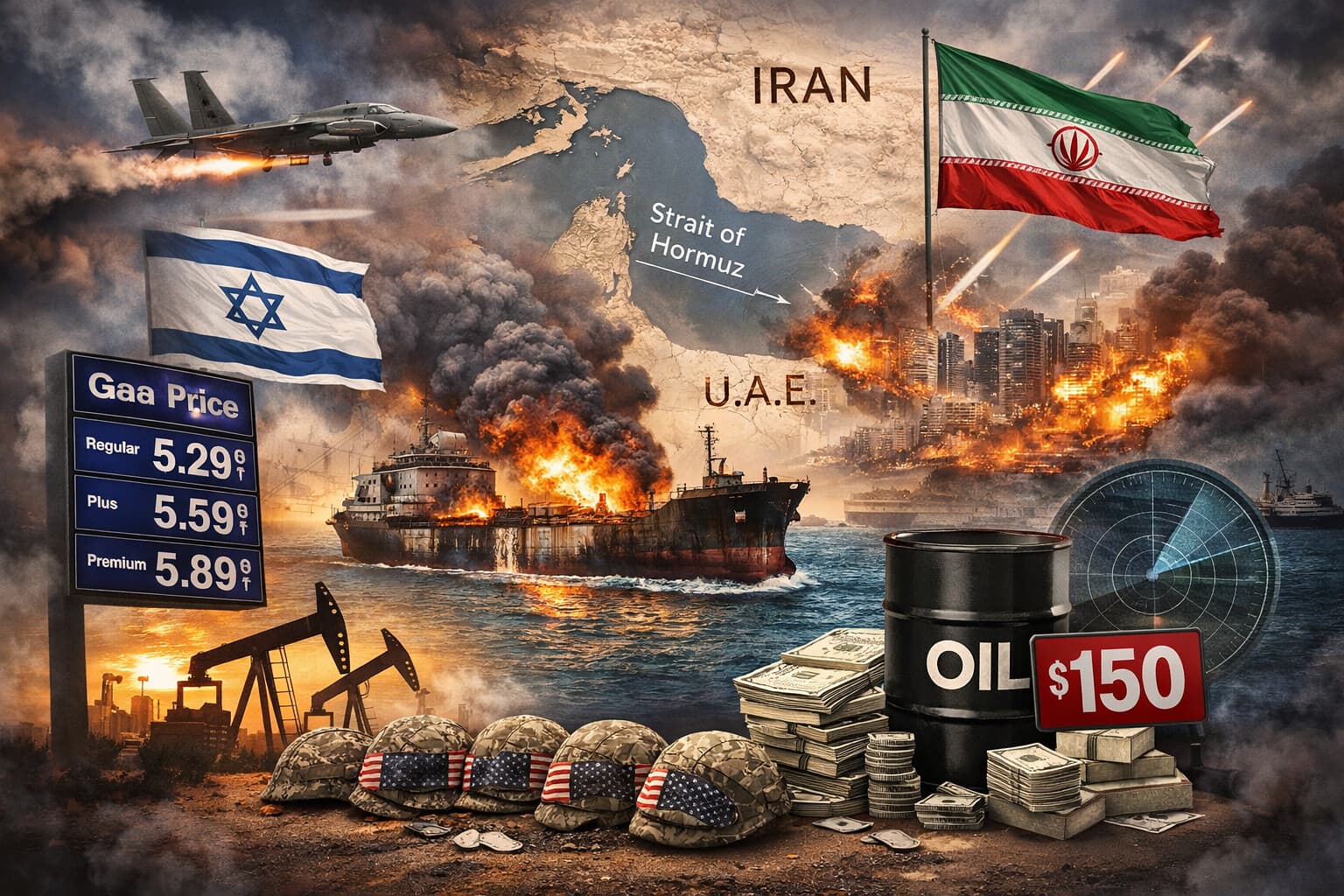
The geopolitical landscape shifted acutely today as Pakistan convened regional powers for critical talks focused on Iran and proposals concerning the Strait of Hormuz. This high-stakes diplomatic engagement immediately injected a substantial risk premium into global markets, particularly impacting energy futures and, by extension, inflation expectations. While no direct macro data release dictated the initial move, the mere prospect of disruption to the world's most vital oil chokepoint is a macro event in itself, forcing institutional portfolios to recalibrate for potential supply shocks and their inflationary consequences. The market's immediate read is one of heightened uncertainty, demanding a re-evaluation of current monetary policy trajectories and the durability of disinflationary trends.
Market participants reacted swiftly, pricing in increased volatility and a flight to safety across major asset classes. While specific bond yield data is not available, the directional implication is clear: a strong bid for sovereign debt, pushing yields lower on the long end of the curve as investors seek refuge. The U.S. Dollar Index likely strengthened as a safe-haven asset, reflecting capital flows away from perceived risk. Equities bore the brunt of the risk-off sentiment, with the Dow Jones closing at $45,167, down 1.7%, the S&P 500 at $6,369, down 1.7%, and the tech-heavy Nasdaq plummeting 2.1% to $20,948. Even the Russell 2000, often a bellwether for domestic sentiment, shed 1.7% to $2,450, indicating broad-based selling pressure.
This current geopolitical tension echoes historical periods where energy security dictated market sentiment and monetary policy. The 1970s oil shocks, the Gulf War, and even more recent flare-ups in the Middle East have consistently demonstrated the profound impact of crude supply disruptions on global inflation and economic growth. Unlike previous cycles where central banks had more conventional tools to combat demand-side inflation, a supply-side shock emanating from the Strait of Hormuz presents a more intractable dilemma, challenging the efficacy of interest rate adjustments to curb price increases driven by external factors. The market remembers these lessons, and the current reaction reflects a deep-seated institutional memory of energy-induced stagflationary pressures.
From a central bank perspective, this development significantly complicates the already delicate balancing act for Jerome Powell and the Federal Reserve, as well as the European Central Bank and the Bank of Japan. Powell's Fed, currently navigating a path towards sustained 2% inflation while managing growth, now faces the specter of renewed inflationary pressures from a geopolitical source, potentially forcing a more hawkish stance than previously anticipated. The ECB, still wrestling with stubborn core inflation, would find any oil price spike particularly challenging, while the BOJ's nascent attempts to exit its ultra-loose policy would be severely tested by a global risk-off environment and potential yen strengthening. The consensus view on easing cycles is now under severe scrutiny, with rate cut probabilities likely diminishing further.
Fixed income analysis underscores the immediate shift in risk perception. The yield curve, particularly the spread between the 2-year and 10-year U.S. Treasuries, likely saw flattening pressures as the front end priced in reduced likelihood of near-term rate cuts due to inflation concerns, while the long end benefited from safe-haven flows. Credit spreads, especially in high-yield and emerging markets, are expected to widen significantly as risk aversion intensifies, increasing the cost of capital for less creditworthy borrowers. Duration risk, which had been a concern for some portfolios with the prospect of rising rates, now sees a temporary reprieve in the safe-haven bid for longer-dated government bonds, though this is overshadowed by the broader systemic risk.
Cross-asset implications are profound and immediate. Equities across the board declined, with tech giants like Meta (-4.0% to $525.72), Amazon (-4.0% to $199.34), Microsoft (-2.5% to $356.77), and Alphabet (-2.4% to $274.34) all suffering substantial losses. Tesla was down 2.8% to $361.83, and Apple fell 1.6% to $248.80, while NVDA shed 2.2% to $167.52. In the digital asset space, Bitcoin traded at $66,654, down 0.3%, and Ethereum at $2,004, down 0.9%, confirming the broader risk-off move, further emphasized by the Crypto Fear & Greed Index registering 9, indicating "Extreme Fear." Commodities, particularly crude oil, would have seen a significant upward move in futures markets, reflecting the supply risk premium, while gold likely rallied as a traditional safe-haven asset.
Looking forward, the market's focus will remain acutely tuned to any developments from these Pakistan talks and the broader geopolitical temperature in the Middle East. The next crucial data releases, particularly inflation prints from major economies, will be interpreted through the lens of this new geopolitical risk, potentially leading to increased volatility. Upcoming central bank meetings, including the Federal Open Market Committee, will provide critical insights into how policymakers intend to address this complex blend of demand-side moderation and potential supply-side inflation. Scenario analysis now heavily favors outcomes involving sustained energy price volatility and a prolonged period of elevated geopolitical uncertainty, demanding dynamic portfolio adjustments from institutional players like BlackRock and PIMCO.
The bottom line for Gokhshtein Media readers is unambiguous: the geopolitical risk premium is back with a vengeance, fundamentally altering the macro outlook. The fixed income market, the ultimate arbiter of risk, is already pricing in a more challenging environment, characterized by potential inflation stickiness and heightened volatility. Investors must prioritize capital preservation and liquidity, re-evaluating duration exposures and credit quality in their portfolios. The current market action serves as a stark reminder that while central banks aim for stability, external shocks remain a potent force capable of rapidly reshaping the investment landscape, demanding a disciplined, risk-averse approach in the months ahead.


