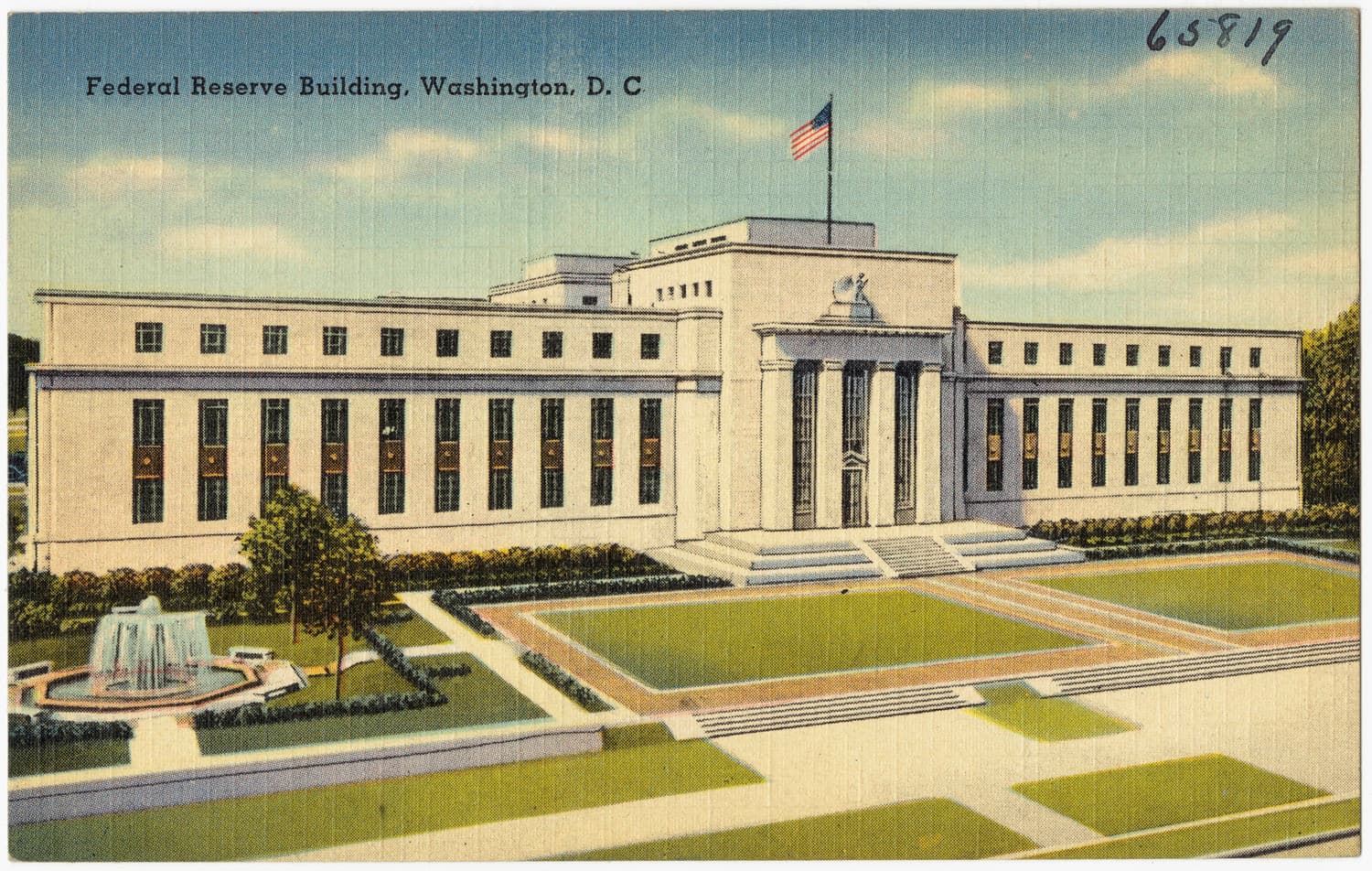
A joint survey by Duke University’s Business School and several Federal Reserve banks signals a significant improvement in economic prospects, presenting a direct challenge to the market's persistent dovish bias regarding future monetary policy. The collaborative quarterly poll of CFOs indicates a notable uptick in corporate optimism surrounding growth trajectories and future capital expenditure plans, reflecting a broad-based confidence not seen in recent quarters. This forward-looking sentiment data, reflecting the views of key decision-makers across diverse sectors, suggests underlying economic resilience that could sustain current activity levels without requiring immediate monetary stimulus. Such a widespread improvement in executive outlook provides a critical counterpoint to narratives of impending slowdowns, forcing a reevaluation of the economy's immediate trajectory and the Fed's reaction function.
The immediate market reaction on this 2026-03-29 has been a broad retreat in risk assets, as investors interpret improved prospects as a green light for the Federal Reserve to maintain its restrictive stance for an extended period. The Dow Jones fell to $45,167, a -1.7% decline, with the Nasdaq experiencing a steeper -2.1% drop to $20,948, reflecting increased skepticism towards long-duration growth stocks. Major tech names like Meta ($525.72, -4.0%) and Amazon ($199.34, -4.0%) led the sell-off, indicating a rotation away from assets most sensitive to higher discount rates and a tighter monetary environment. Even crypto markets felt the pressure, with Bitcoin trading at $66,653 (-0.3%) and Ethereum at $2,004 (-0.9%), while the Crypto Fear & Greed Index plunged to an 'Extreme Fear' reading of 9, underscoring the widespread risk-off sentiment.
Historically, shifts in corporate sentiment, particularly from such influential surveys, have often preceded actual economic turning points or significant central bank pivots. During the post-Global Financial Crisis recovery, similar upticks in business confidence were reliable precursors to sustained periods of economic expansion, gradually prompting the Fed to normalize rates. Conversely, during periods of heightened uncertainty, a decline in these metrics would signal an impending slowdown, forcing central banks into accommodative stances. This current finding, therefore, strengthens the 'soft landing' narrative that has been debated fiercely, suggesting that the economy possesses an underlying robustness that can withstand higher interest rates for longer than many market participants have anticipated.
From the central bank's perspective, this survey provides further justification for the Federal Reserve under Chair Jerome Powell to maintain its current restrictive policy stance, or at least delay any anticipated rate cuts. If economic prospects are indeed improving, the Fed's dual mandate of maximum employment and price stability suggests less urgency for monetary easing, especially if inflation remains stubbornly above target. This data directly challenges the market’s persistent pricing of aggressive rate cuts, aligning more closely with the Fed's own 'higher for longer' rhetoric that has often been dismissed by dovish analysts. President Trump’s administration has consistently emphasized economic growth, and these survey results offer a positive backdrop that could influence broader policy discussions, even as the Fed maintains its operational independence.
The fixed-income market faces renewed pressure as these improved economic prospects solidify the 'higher for longer' narrative. Bond yields across the curve are poised for upward pressure, particularly on the long end, as inflation expectations could firm up and the market prices out aggressive rate cuts that were previously baked in. We anticipate a persistent inversion or at best a flattening of the yield curve in the short term, as the Fed maintains its front-end policy rate, while the long end struggles to price in future growth without significant inflation concerns. Credit spreads, however, may see some compression, as the perceived reduction in default risk stemming from a more robust economy could tighten the premium on corporate debt, benefiting high-quality issues particularly. The duration risk for long-dated fixed-income portfolios remains acutely elevated, necessitating active management and a potential shift towards shorter-duration assets or floating-rate instruments to mitigate capital impairment from rising yields.
The cross-asset implications are significant, signaling a challenging environment for assets that thrived on the expectation of rapidly falling rates. Equities, particularly the long-duration growth stocks that dominate indices like the Nasdaq, will likely continue to face headwinds, as higher discount rates erode future earnings valuations, as seen in today’s declines for NVDA ($167.52, -2.2%) and Apple ($248.80, -1.6%). Conversely, value stocks, financials, and sectors less sensitive to interest rate fluctuations may find relative support. In the digital asset space, Bitcoin and Ethereum, despite the approval of spot ETFs in January 2024 and May 2024 respectively, often react to broader risk-off sentiment, and a 'higher for longer' rate environment tends to dampen speculative fervor. Commodities, on the other hand, could see mixed signals: industrial metals might benefit from improved growth prospects, while gold, typically a safe-haven asset, could struggle against a stronger dollar and rising real yields.
Looking forward, market participants will intensely scrutinize upcoming macro data releases, including the next CPI, PPI, and jobs reports, to either confirm or contradict the optimistic sentiment expressed in the Duke/Fed survey. The commentary from Federal Reserve officials, especially Chair Powell, at upcoming FOMC meetings will be parsed for any shift in tone reflecting this improved outlook. Analysts at firms like BlackRock and PIMCO will be adjusting their duration positioning and credit allocations based on these evolving expectations. Scenario analysis suggests that if subsequent data validates this survey's findings, the probability of any rate cuts in 2026 will diminish significantly, forcing a complete repricing of the yield curve and a fundamental re-evaluation of asset allocation strategies across global portfolios.
The bottom line for professional money managers is clear: the market's entrenched dovish bias is being systematically challenged by improving economic data, and this Duke/Fed survey is a potent data point. The implication is that the Federal Reserve will likely maintain a restrictive policy for an extended period, dampening the prospects for a swift return to lower borrowing costs. Investors must adjust their fixed-income portfolios to account for persistent duration risk and potential yield curve shifts. Risk assets, especially those with high growth expectations predicated on cheap money, will continue to face a challenging environment as the cost of capital remains elevated, forcing a focus on fundamental strength and robust cash flows rather than speculative narratives.


