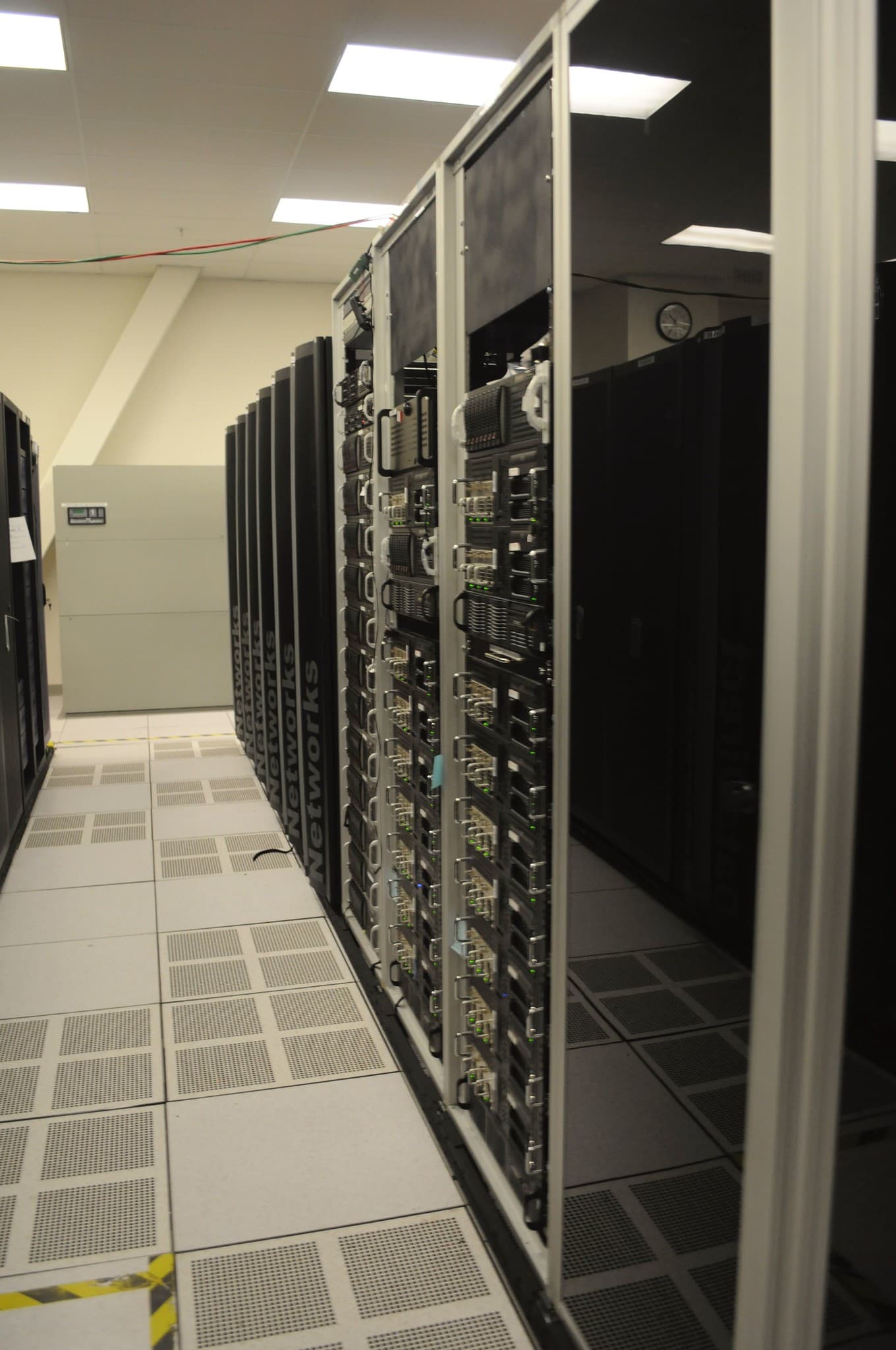
The financial world is buzzing following reports that SoftBank has committed a staggering $40 billion loan to a key AI infrastructure provider, a move directly tied to securing vast compute resources for OpenAI. This isn't just another investment; it's a calculated maneuver by Masayoshi Son to solidify a critical component of the AI supply chain, effectively de-risking OpenAI's operational scaling and paving a clear path to its public debut. With OpenAI's last tender offer valuing the company between $80 billion and $90 billion, this $40 billion injection into its foundational infrastructure suggests an imminent valuation north of $100 billion, firmly planting it among the most valuable private tech companies globally. This capital ensures OpenAI can acquire the necessary NVIDIA H100 and upcoming B200 GPUs, essential for training its next-generation models like GPT-5 and beyond, without immediate dilution of its equity, thereby maintaining a premium for its eventual IPO.
Market reaction has been swift and decisive across the AI landscape. Shares of NVIDIA, the undisputed king of AI hardware, surged nearly 3.5% on Friday following the news, reflecting heightened demand for its chips. Microsoft, OpenAI’s primary strategic partner, saw its stock climb 1.8%, underscoring investor confidence in its AI integration strategy. Conversely, competitors like Google's Alphabet (GOOGL) experienced a marginal dip of 0.7%, as the market interprets SoftBank's move as a definitive strengthening of OpenAI's competitive position. This substantial capital infusion into the AI ecosystem signals a robust and accelerating sector sentiment, pushing valuations higher across the board for pure-play AI companies and hardware providers, while simultaneously intensifying the competitive pressure on other foundational model developers like Anthropic and Google DeepMind. The message is clear: the AI arms race for compute is escalating, and those with access to capital and hardware will dictate the pace.
SoftBank's history is replete with both audacious successes and cautionary tales, from its early triumph with Alibaba to the over-exuberance seen with WeWork. However, this $40 billion isn't a Vision Fund equity gamble; it's a strategically structured loan, indicating a more measured, yet equally aggressive, approach to securing a foundational piece of the future AI economy. For OpenAI, this represents a pivotal moment in its trajectory from a research-focused non-profit to a market-dominant 'capped-profit' entity. Its journey, accelerated by Microsoft's initial $1 billion investment in 2019 and subsequent multi-billion dollar commitments, has seen it launch transformative products like ChatGPT, DALL-E, and Sora at breakneck speed. This latest capital injection isn't merely growth funding; it's a pre-IPO war chest designed to solidify its lead in an exponentially expanding market, ensuring it can meet the insatiable demand for advanced AI capabilities.
Industry experts are largely in agreement: this is a game-changer. Dan Ives, Managing Director at Wedbush Securities, stated unequivocally that this move validates the 'AI Supercycle' and projects OpenAI's IPO will be the 'iPhone moment' for the public markets. Analysts at Goldman Sachs have already begun adjusting their AI sector outlooks, with a recent report forecasting the global AI market to exceed $1.8 trillion by 2030, driven significantly by advances from companies like OpenAI. Cathie Wood’s Ark Invest, known for its bullish stance on disruptive innovation, views this as further evidence of the exponential S-curve adoption of AI, solidifying the thesis that access to compute and top-tier talent are the ultimate competitive moats. Venture capitalists, while typically focused on earlier stages, are now closely watching the pre-IPO landscape, recognizing that a successful OpenAI debut will open floodgates for subsequent AI listings.
At its core, OpenAI's value proposition lies in its unparalleled technical prowess and market positioning. Its large language models, built on sophisticated transformer architectures, have consistently pushed the boundaries of what AI can achieve, from natural language understanding to multimodal content generation. The company's strategic collaboration with Microsoft provides it with a seemingly endless supply of Azure AI infrastructure, a critical advantage in an environment where compute is more valuable than gold. This partnership, coupled with its ability to attract and retain top-tier AI talent and its dominant ChatGPT brand recognition, forms an almost insurmountable competitive moat. While challenges remain, including the astronomical costs of training and inference, ethical AI development, and the rise of powerful open-source alternatives, OpenAI's current architecture and market penetration give it a commanding lead that this $40 billion loan only further entrenches.
The regulatory landscape, however, remains a significant consideration. Governments worldwide are increasingly scrutinizing the growing power of big tech and the potential for AI monopolies. The FTC, DOJ, and the European Commission have already expressed concerns regarding market concentration and data privacy within the AI sector. Microsoft's deep ties and substantial investment in OpenAI have previously drawn regulatory attention, and this new $40 billion strategic financing, even if structured as a loan, will undoubtedly invite further scrutiny. Regulators are focused on ensuring fair competition, preventing anti-competitive practices, and addressing potential national security implications of powerful AI. While unlikely to derail an IPO entirely, these regulatory headwinds could introduce delays or impose certain conditions, a factor every sophisticated investor must weigh against the immense market opportunity.
Looking forward, OpenAI's product roadmap is aggressive and transformative. The anticipation for GPT-5 is palpable, promising even greater reasoning capabilities and multimodality. Beyond foundational models, the company is actively developing agentic AI systems that can perform complex tasks autonomously and is expanding its enterprise offerings for custom AI solutions. This $40 billion capital injection is not just for current operations; it's a fuel injection for future innovation, ensuring OpenAI can continue to invest heavily in R&D and scale its infrastructure to meet projected demand. Current revenue run rates, estimated at over $2 billion for 2024, are projected to surge past $5 billion by 2026, driven by API usage, enterprise subscriptions, and new product launches. The total addressable market for AI is expanding across every sector, from healthcare to finance to creative industries, and OpenAI is positioned to capture a significant share of this growth.
The bottom line is crystal clear: SoftBank’s $40 billion strategic loan is the final, undeniable signal. This isn't speculation; it's a calculated move designed to ensure OpenAI's compute dominance ahead of its public market debut. OpenAI will IPO by late 2026. This offering will not just be another tech IPO; it will be the definitive public market event for the AI era, setting new valuation benchmarks and solidifying the sector's long-term trajectory. Investors who aren't paying close attention to OpenAI's pre-IPO maneuvers are missing the forest for the trees. The future of technology is AI, and OpenAI is at its vanguard. Position accordingly.